
Why is it so important to independently assess a house for cracks in the walls and damage to the foundation?

WHILE YOU’RE VACATING OUT OF TOWN OR IN THE BREAKS, IT’S WORTH TAKING TIME TO INSPECT YOUR BUILDING The vacation period (summer or winter) is an ideal time to do some maintenance on your home and the surrounding area. That’s why Premium Technologies reminds homeowners and renters to regularly check the condition of your building or structure for cracks in the walls, which could indicate foundation damage. Extreme weather conditions, such as drought, rain, or frost, can affect the condition of the soil on which your home stands. As humidity and temperature levels change, the soil can contract and expand. This often results in cracks in the walls and an uneven floor (or foundation), which is a sign that your home is experiencing uneven settlement and a number of other damages. Another factor that is often overlooked is the damage that tree roots can cause to your home’s foundation. Trees and shrubs need a lot of water to survive – a mature deciduous tree needs up to 50,000 litres of water per year. Especially during dry spells when soil moisture levels drop dramatically, trees spread their root systems widely in search of water. In suburban areas or private housing estates, it is common to find many large, mature trees close to a house. Trees in close proximity can have roots that penetrate the foundation of the structure, which can often compromise the stability of the house. While structural movement is a natural process, homeowners should look for and fix cracks in the walls as this is often a sign of damage to the foundation. If cracks do not close over time or continue to open beyond a width of 1-3 mm, then over time a more serious problem will arise and you should seek professional advice immediately. It is important to remember that if the problem is not addressed in time, the risk of significant and expensive damage to the building increases dramatically. Premium Technologies can provide a fast and effective solution for lifting and leveling buildings and structures. The non-invasive Premium Technologies solution combines engineering and injection technology with additional technologies to plug or reinforce cracks in the building. Premium Technologies is a unique two-in-one solution that provides both foundation improvement and re-leveling and foundation reinforcement. The technology is used to increase the bearing capacity of the foundation soil and fill existing voids, all at an affordable cost. Premium Technologies specialists design and perform work directly at the base of structures, with minimal intervention in the operation of the structure and without causing additional damage to it. The geopolymer material is injected through 12 mm diameter pipes into the foundation soil (or floor). Premium Technologies geopolymer injection increases the bearing capacity of the foundation soil and allows for quick and minimal disruption to the building’s structure, without disrupting your daily routine or causing inconvenience. If you suspect your home has foundation damage, Holly Industrial’s specialists are available 365 days a year to provide a professional inspection of the property and assess its severity. For more information, please contact us or call us. We will be happy to assist you.
Comparison of concreting methods and Premium Technologies
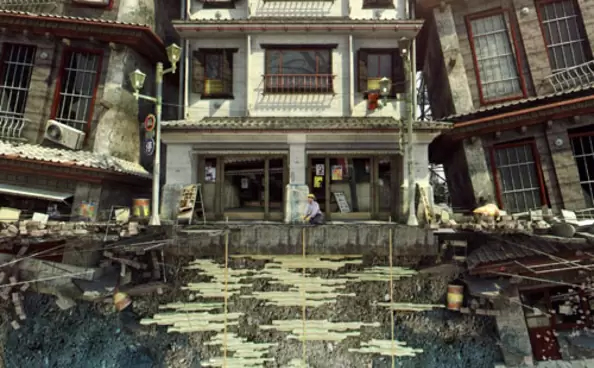
CONCRETE WORKS VS Premium Technologies COMMON CAUSES OF BUILDING FOUNDATION DEFORMATION Premium Technologies’s approach to foundation reinforcement uses unique techniques that are similar to high-level surgery. Previously, as a construction organization, we used cementing, but now we use our new solution, Premium Technologies technology, as it is a fast and reliable alternative to concrete and pile foundation reinforcement. This solution eliminates the problems and causes of settlement and deformation of structures by re-leveling concrete foundation slabs, strip foundations, floor slabs, columnar foundations and even driveway issues. THE Premium Technologies PROCESS First of all, our resin is injected into the soil under your home through tiny holes (typically 12 – 18 mm in diameter). As a result of a chemical reaction when the components are mixed, the Premium Technologies resin expands, filling any existing voids and compacting the soil of the foundation base (or other supporting structures) and allows for controlled lifting and leveling of the house. During the work, the entire process is constantly monitored by top-class laser equipment for optimal results and safety. As a result: The cracks in the walls are closed, after which for brickwork only re-treatment of the joints with mortar or sealing with special reinforcement may be required, and for plastered walls – a thin patch and repainting; Windows and doors function normally again; Gaps between baseboards and reinforced floors disappear. WARRANTY The materials have been specially designed to resist drying out or deterioration. The quality and required characteristics are guaranteed for a period of over 50 years, in strict accordance with environmental and safety requirements. COMPARISON OF Premium Technologies FOUNDATION REINFORCEMENT METHOD WITH CONCRETE WORK When it comes to foundation reinforcement, concrete work has been the choice of classic construction for many years. Compared to traditional concrete work, the approaches underlying Premium Technologies technology methods are speed, cleanliness, reliability and predictability, cost-effectiveness and non-interference in processes related to the operation of the asset. Our technology guarantees the lifting and leveling of the building or structure, which none of the classic methods can guarantee. On average, we can raise your house to the design level in just one to two days or within one or two weeks, depending on the technology of building the house. In addition, there is no mess with resin injections – it does not require excavation, water, cement or concrete. You do not need to completely vacate the premises. Unlike concrete work, which requires extensive preliminary internal work, our injection solution does not require any of this. Injection is carried out through tiny holes (only 12-18 mm in diameter), which causes minimal damage to the structures. When concrete work, poor ground conditions should be avoided, such as loose, dusty or wet soils, as well as poorly compacted backfill soil. The reason is that the added weight of the concrete can make the situation worse. Our foundation reinforcement method is ideal even for clay or loess soils, eliminating the main causes of subsidence. Premium Technologies technology provides an increase in the bearing capacity of the base soil, allowing for controlled lifting of buildings and structures. CONCRETE WORK COSTS The actual cost of concrete reinforcement depends on many factors, including: your location; the actual cause of the problem; the nature and condition of the base soil; the type and profile of the building’s foundations; surroundings, such as access to the site, adjacent buildings or retaining walls; unknown or unforeseen underground conditions; the amount of material required; the time of work. Thus, if only one small area of the house needs reinforcement, concreting may be cheaper, but this will also lead to additional problems over time. For example, the appearance of new cracks in the walls of the house, which may occur as a result of the increased weight on the foundation soil. In addition to being more convenient, safer and more reliable, our injection solution is usually more economical than traditional methods of foundation reinforcement, when all costs and inconveniences are taken into account.
Crack resistance of reinforced concrete structures
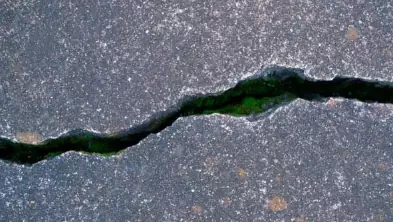
Crack resistance is the ability of a material to resist various mechanical influences (internal and external), which leads to the development of cracks. The indicator is characterized by the time before cracks appear under the influence of temperatures, bending forces, compression, tension, and chemical processes. Accordingly, the longer a reinforced concrete structure does not lose its integral structure during operation, the higher the crack resistance of the material. Crack growth is observed if the intensity coefficient and stress growth exceed the available limit values of the material. A correct assessment of crack resistance can only be given by studying concrete samples. The study is an effective method of predicting the stability of the structure in the long term. WHAT AFFECTS THE CRACK RESISTANCE OF CONCRETE? The rate of crack formation in a reinforced concrete structure can be influenced by both external factors, such as humidity or temperature, and the quality of the material itself. To determine the value of crack resistance, the indicators of material strength, elasticity, shrinkage, creep, etc. are taken into account. The effect of negative factors can be enhanced by the characteristics of the structure itself, its shape, and dimensions. Studies show that the quality of cement can also significantly affect the rate of crack formation. For example, cement with a low hardening rate is in most cases less prone to cracking. Therefore, it is possible to objectively judge the crack resistance of reinforced concrete structures only in a complex. HOW TO INCREASE THE CRACK RESISTANCE OF CONCRETE? Even minimal cracks can provoke the destruction of the structure in the future. In the crack zone, the reinforcement is exposed, as a result, corrosion appears, which leads to even greater crack expansion. Increase the crack resistance of concrete by using the following actions: adding special reinforcing additives to the concrete mixture; magnetizing water; reducing the composition of undesirable components; creating an additional surface layer, the composition of which will prevent the appearance of microcracks; formation of optimal microstructure of concrete. The main task when choosing the optimal composition of the concrete mix is to find such a ratio at which it will be possible to achieve maximum strength of the material with minimal negative qualities. HAS A CRACK APPEARED? A QUALITY SOLUTION TO THE ISSUE To properly repair cracks in reinforced concrete structures, the cause is first identified. Work on eliminating cracks in reinforced concrete structures can be conditionally divided into 2 areas: Repair and restoration of the bearing capacity of reinforced concrete structures. Construction of new substitutes or unloading of structures. To eliminate cracks in reinforced concrete structures, the injection method is most often used. A special strengthening solution is pumped into the problem area under pressure. To restore the protective layer, the shotcrete method is used: a repair mixture is applied under pressure to the repaired and cleaned surface. If defects in concrete have appeared as a result of soil shrinkage, leaching or loosening, this problem must be eliminated immediately. When contacting Premium Technologies specialists, you will be offered the most modern and effective methods of strengthening the base of reinforced concrete structures to maintain their durability, strength and reliability.
Leveling of roads, parking lots and loading docks
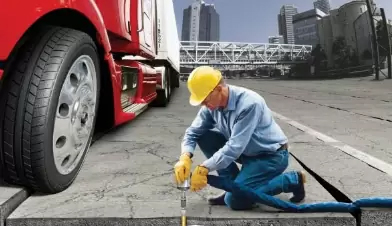
INNOVATIVE METHODS OF Premium Technologies GEOPOLYMER INJECTION ALLOW URGENT REPAIR OF CONCRETE ROAD SURFACES. THANKS TO THE USE OF GEOPOLIMERS, IT IS POSSIBLE TO STRENGTHEN THE GROUND UNDER THE ROAD LAYER IN A MATTER OF HOURS, AS WELL AS STABILIZE AND LEVEL THE POSITION OF SINKING CONCRETE SLABS. Long-term operation, excessive loads, environmental factors, etc. can lead to a deterioration in the condition of roads. Individual concrete slabs used in the construction of the roadway and parking areas can sag. As a result, the quality of the road surface deteriorates and the operational load on the car increases. This can be especially pronounced in areas with heavy traffic, in freight parking lots, loading areas, maneuvering areas, etc. The described cases can provoke accidents, to prevent which repair and alignment of the concrete surface is performed. LIFTING CONCRETE SLABS The range of tasks that the Slab Lifting technology allows you to solve is very wide. Geopolymers can be used to raise and level the position of the sunken slabs of the road section, to ensure the reconstruction of emergency zones of the roadbed adjacent to bridges, railway crossings, cargo platforms, port docks, etc. The use of geopolymer resins is much more effective than the use of traditional technologies and materials for restoring road surfaces. At the same time, a full cycle of repair procedures using geopolymers takes from several hours to several days, while the restoration of concrete pavement with the dismantling and reinstallation of slabs takes weeks and even months. Work using geopolymers can be carried out only partially limiting traffic during the period of the lowest road traffic. Passenger cars, forklifts and even heavy goods vehicles can move along the repaired section 15 minutes after the completion of the work. OTHER TECHNOLOGY POSSIBILITIES Deep Stabilization injection technology can also be used for the repair and arrangement of roads. It allows to increase the bearing capacity of the base soils on which the road or parking area is arranged. This may be relevant when laying new highways and autobahns. The use of geopolymers on excessively moist soils is especially effective. In this case, the strengthening of the soil during injection occurs by displacing “excess” water. ALGORITHM OF WORKS To stabilize, level and lift sections of the concrete road surface using Slab Lifting technology, it is necessary to drill a certain number of holes with a diameter of 12 – 16 mm in the roadbed. Tubes for injecting the material are inserted into the prepared holes. Geopolymer resins are introduced directly under the concrete surface, expanding to fill the voids in the soil and displacing “excess” liquid. When expanding, the geopolymer material provides compaction and strengthening of the soil, as well as lifting of subsided concrete slabs. The accuracy of the slab lifting is monitored in real time using laser levels. The maximum measurement error is ± 1 mm.
Continuation of important questions and answers on the topic of Premium Technologies (part 2)
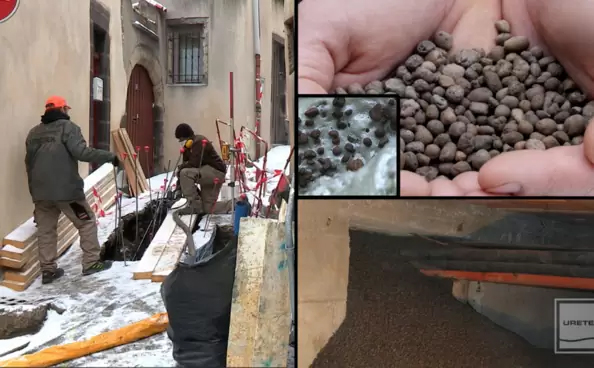
HOW DOES Premium Technologies HELP RETURN A HOME OR BUILDING TO ITS FORMER LEVEL? Our specialists (engineers and technicians) carefully develop a lifting and leveling project for your home, taking into account the current conditions and requirements revealed during the survey. A system of laser traps is used to closely monitor progress and determine the required level of lifting. Our restoration methods involve the minimum possible intrusion into your personal space. Similar to delicate surgery, Premium Technologies resin is inserted through tiny holes ranging in diameter from 12 to 28 mm when used inside the home. However, to minimize discomfort, all work is carried out by default outside, unless circumstances force us to move inside. WHAT TO DO IF I HAVE TILES OR PARQUET FLOORS? We plan the holes so that the intervention is as inconspicuous as possible. For example, under the skirting board or where the tiles meet, where possible. We also choose the smallest diameters for the drills (6 – 8 mm). These tiny holes are almost invisible if they are plugged with a small wooden plug or a special cement or epoxy mortar. DO I NEED TO REMOVE MY CARPET (CARPET COVERING)? If there is a carpet in the room, it will need to be rolled away from the affected area. Often it can simply be unscrewed from the junction along the wall. WHAT HAPPENS WITH AN UNEVEN FLOOR? Premium Technologies tries to perfectly level the floor. However, there are cases and conditions where the desired elevation can damage the structure. In this case, Premium Technologies raises the floor slab to the extent that objective conditions allow, and focuses on improving the foundation to ensure that the achieved level is maintained in the long term. WHAT DO I NEED TO DO BEFORE Premium Technologies STARTS ITS WORK? One of our teams of specialists will inspect and assess your facility, including the subsoil, and determine what is needed, providing a technical report and solution. The location of utilities is required to reduce the risk of Premium Technologies material affecting networks (water supply, sewage, electricity). Damaged plumbing and pipelines are often one of the causes of subsidence, deformations and cracks in structures. If this is detected, Premium Technologies recommends repairing the pipeline before starting work. Tree roots are also often the cause of foundation problems. In some cases, Premium Technologies specialists may recommend installing root barriers or removing trees to a safe distance. This can be done both before and after the work. Also, the Premium Technologies mobile work complex (category C vehicle) needs to be parked next to your house for access during the day. IS THERE A RISK OF DAMAGE TO UNDERGROUND SERVICES ON THE FACILITY? Premium Technologies resin penetrates the soil through a network of injection wells. Where communications are in a state of emergency (for example, cracks or leaky joints in pipes), the resin can enter the pipes and cause blockages. In this case, the responsibility for removing the material lies with the property owner, but this is only the case if the damaged pipe was not marked by the owner during the survey period. The same applies if a Premium Technologies specialist drills a pipeline that is located but not marked for design. DO YOU PROVIDE A WARRANTY? The materials we use have been designed for use in soils or similar confined environments to resist shrinkage and wear. Polymeric materials have a Premium Technologies warranty of up to 60 years. Recent studies of artificial aging show that materials can last up to 1000 years in natural (non-extreme) environmental conditions. HOW DO I KNOW I’M GETTING VALUE FOR MY MONEY? Premium Technologies does not offer a “one size fits all” solution. We assess each case and property individually to provide an individual solution, analogous to treating a specific person for a specific condition. We provide a comprehensive assessment of the resources needed and are available to answer any questions along the way. Our many years of international experience in various environments help us to provide recommendations on the expected result of the work, based on the type of building, soil conditions and the problem situation in a particular region. WHAT SHOULD I DO TO BEST MANAGE MY BUILDING IN THE FUTURE? Premium Technologies recommends strictly adhering to the norms of operation of buildings and structures, devoting more time and effort to prevention. PROTECTING YOUR BIGGEST ASSET “Premium Technologies” understands the importance of protecting buildings and structures. For over 40 years, we have built our reputation as a reliable supplier of cost-effective and innovative solutions that eliminate above-ground and underground engineering problems, such as subsidence of slabs and foundations. OF COURSE, EVERY HOUSE IS INDIVIDUAL And that’s why we take the time to get to know your situation and specific problems in depth in order to find the right solution for the restoration of your home or property. It is important to note that after completion
Solutions to geotechnical engineering problems for various sectors of the economy
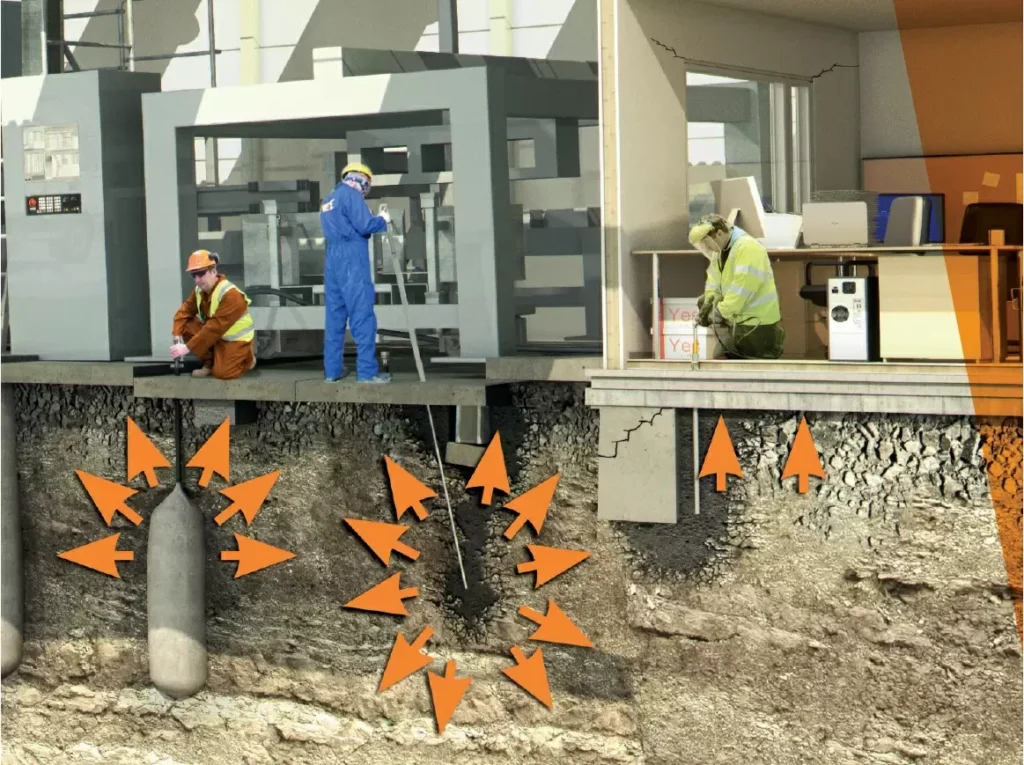
WHAT AND HOW DOES Premium Technologies HELP? COMMERCIAL SECTOR Ensuring the safety of premises when re-leveling or restoring load-bearing structures. Premium Technologies® raises, levels and supports buildings and structures of any size. It also corrects unstable (moving) and sagging driveways, parking lots, floors and foundations. The technology methods strengthen and stabilize weak base soil. As a result: the risk of an accident is eliminated; water or other technical fluid accumulation areas disappear; unwanted voids and cavities are filled; doors and windows are returned to working condition; cracks in walls can be completely closed. Because Premium Technologies® uses a local injection method similar to microsurgery, the method is not only cost-effective, but also reduces business downtime to 0. Your business can operate as usual without having to move furniture, inventory or equipment. There will be no mess or dirty work (including dismantling and excavation), so you don’t have to worry about keeping your customers, tenants or employees safe. TRANSPORTATION AND UTILITIES Maximizing and extending the current value of assets, Premium Technologies successfully levels and restores everything from concrete slabs and sidewalks to roads and bridges. We also use our technology to fill cavities, voids and abandoned pipes, keeping these areas safe. Non-invasive methods save time, so the job can be done quickly and without harmful environmental impacts. Using Premium Technologies® methods, we can: help prevent water ingress and erosion of structures; stabilize layers and layers in tunnels; strengthen foundations and subsoil; assist in the decommissioning of old infrastructure; consolidate and secure soils around infrastructure; improve the backfilling of retaining walls and slopes. MINING Stabilize heterogeneous soil to improve safety. Premium Technologies can help stabilize above-ground structures such as reclaimer or stacker rails, conveyor belt supports, tanks and machinery, as well as roads and overpasses. This helps minimize safety risks and downtime in all types of mining operations. We can also perform void filling and post-mining restoration procedures, as well as control water or gas intrusion. We use specialty resins to stabilize layers in mines and tunnels, reducing hazardous ground movement and sedimentary rock instability. Premium Technologies’s experts have years of experience helping mining companies solve soil and foundation instability issues. MANUFACTURING AND WAREHOUSE SECTOR Keeping equipment and the entire value chain running, regardless of the size of your building, driveway or storage system, Premium Technologies® provides a fast, reliable, cost-effective and fail-safe solution for your business. For example, sagging or warped slabs can be dangerous, creating trip hazards or water pools, which can create health and safety issues in industrial buildings. Uneven floors can cause equipment to malfunction or go out of tolerance, potentially damaging or even destroying it. The cost of maintenance or replacement of fixed assets can be high, including the cost of downtime in the process. Using our resins, we can bring your building and floors back to “level” without causing structural damage. Premium Technologies® also improves the bearing capacity of the subgrade, so you can confidently operate heavy trucks on driveways and store heavy loads in warehouses. Premium Technologies® provides significant benefits, including: minimum disruption and downtime; no excavation, no mess; forklifts and trucks can travel over concrete slabs and driveways as normal just 30 minutes after a local area treatment; no need to move inventory or equipment; warehouse shelving and conveyor systems return to their correct working position.
Cementation is increasingly not the best solution. The next stage of development of injection technologies is already here
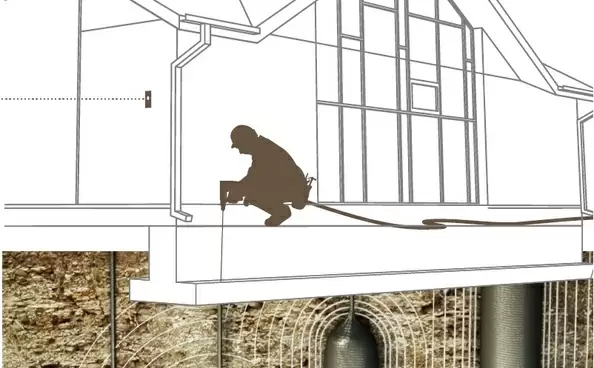
Soil layers are prone to expansion and contraction when their moisture content (and its aggregate state) changes. When reinforcing the foundation with concrete, a rigid structure is formed, which begins to rise and fall during periods of changing soil water saturation. In the process of constant vertical and horizontal soil movements, cracks appear, and the integrity of the base structure is destroyed. The heterogeneity of soil layers further enhances the dynamics of the destruction of the object. Silicatization and injection of cement mortars are prohibited in some types of soils, for example, in loess, due to the presence of water in them, which makes it impossible for the materials to acquire the necessary properties. Depending on the chemical composition of the soils, silicate and cement mortars may not acquire the necessary strength and turn into pulp, which will further worsen the bearing capacity of the soils. Also, depending on the degree of soil acidity, the setting time of concrete mixtures and silicate mortars may be unpredictable. And another minus – cement mortars, subject to shock and vibration loads, turn into construction waste. ADVANTAGES OF CEMENTATION (AND SILICATION AS A RELATED TECHNOLOGY IN TECHNIQUES OF WORK PERFORMANCE) this is a traditional engineering technique; it has wide engineering application, due to the high degree of technology testing. DISADVANTAGES OF CEMENTATION (AND SILICATION) it can be a slow process, since the result is unpredictable even after the project is approved; “dirty” technologies due to technological features; frequent occurrence of emergency situations; this is a labor-intensive process that requires a lot of time, personnel and serious equipment; in clays and other mobile or changing over time soils, it is not applicable, because it does not essentially solve the cause of the problem; cannot be used in water-saturated soils; not capable of predictable leveling and lifting of structures. Premium Technologies SOLUTION This is a more modern and proven method of strengthening foundations and foundations of buildings (since 1978). It involves injecting environmentally neutral resin under the foundation, into the base through small holes (8-28 mm). The resin is fed into the soil and expands as it hardens. It also fills voids and cavities. As the resin injection continues, it will ultimately raise the house or structure higher. The process is carefully controlled by practicing technicians who control the injections with special highly sensitive laser instruments. The resin formula is carefully selected according to the unique weather, soil conditions and tasks facing the engineers. Premium Technologies is free from all the disadvantages of cementation and silicateation, as it is elastic and does not interact (is not significantly affected) with the chemical environment of the base soils. Compared to the injection of cement (or silicate) solutions into the base, the Premium Technologies technology has elasticity in the approach and implementation of the project, which is a serious advantage. TECHNOLOGICAL ADVANTAGES OF Premium Technologies all components required for the reaction are mixed during injection; the reaction time is predictable and controlled; the reaction process depends on external factors; one-way design interchangeability from cementation to Premium Technologies without loss of quality; cleanliness and tidiness: no need for excavation, which means no dirt and waste; efficiency and speed: most projects can be completed within two to three days; the client can continue to use the facility during work; It is a more than 40-year-old, globally proven method of strengthening foundations and foundations to protect the future of your most important asset.
Areas of application and intersection of Premium Technologies pile solutions and technologies
Premium Technologies is a technology for strengthening foundations, lifting and leveling foundations, which allows avoiding shifts and settlements of wooden, brick, stone and concrete structures. The application of Premium Technologies solutions in practice varies from solving the problems of uneven settlement and deformations of private residential buildings to solutions for warehouse and industrial complexes, from highways and railways to airports. Premium Technologies can also be used in a complex of anti-skid works, for correcting subsidence of pipelines and waterproofing of complex objects. Pile technologies are not able to solve the key task – to compact and strengthen the soil layer of the base. The use of Premium Technologies methods increases the efficiency of pile structures by achieving the necessary soil density to increase lateral friction (if the pile is to work as a “hanging”). In some cases, the need for pile driving is eliminated, because the soil layers take on the state of a “conditional monolith” and become a powerful foundation for the existing structure. Penetrating into the smallest voids and binding the soil (due to the high adhesion of the material), geopolymer resins produce conditional “reinforcement” of the soil. Pile technologies are labor-intensive and do not guarantee a 100% solution to the issue, because they do not have the ability to influence the bearing capacity and reduce the degree of waterlogging of the base soils. In the case of driving inclined piles under the foundation, there is a high risk of their breakage and destruction. Premium Technologies technologies eliminate all the disadvantages of traditional methods and offer a unique tool that allows you to do what cannot be applied to the pile solutions listed above. By affecting the soil layers as a whole, and not pointwise, deep injection of geopolymer allows you to avoid deformation and destruction of the base structure. Unlike traditional technologies, Premium Technologies is able to solve the problem of increasing the bearing capacity of loess soils. Putting the facility into operation, increasing the bearing capacity and investment efficiency of the development site, stopping the subsidence of buildings and vertical shifts, performing a complex of anti-sliding works, and waterproofing foundations – all these tasks are within the power of Premium Technologies geopolymer resins. COMPARISON OF PILE TECHNOLOGIES AND Premium Technologies TECHNOLOGIES: OWN SOLUTION: Work completion time – from 3 to 4 weeks Mandatory dismantling of old and erection of new load-bearing structures High level of noise and dust during work Requires temporary slowdown or complete cessation of business processes Complex measures for preparation and mobilization of equipment Internal and external protective measures are often required Requires additional delivery/collection/disposal of consumables Requires significant areas for placement of equipment, personnel and materials, which entails additional costs Has a negative impact and risk on structures standing in the work area In some cases, requires protection of the project in the expert examination Premium Technologies SOLUTION: Flexible work schedule, without interference with the normal operation of the site Environmental efficiency and safety for health and the environment Work completion time in 2-3 times faster than traditional methods Working with small attachments Mobility Cleanliness of work Guaranteed result Average project duration – 5 days No intervention in the supporting structure Adaptability and flexibility at the design stage
Frequency and types of building inspections
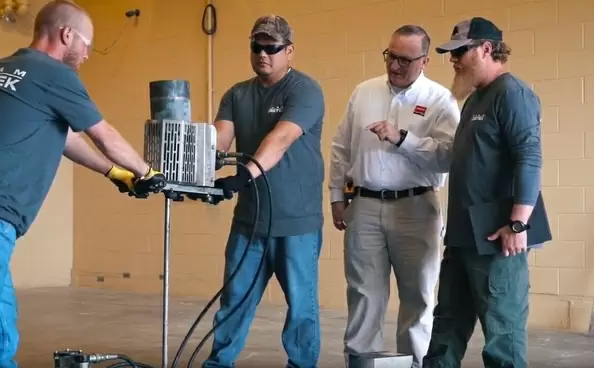
In order to carry out a full-fledged inspection procedure for any building, the purpose of the work being carried out should be clearly defined. In addition, it should be taken into account that the process itself depends on the period of use of the building. In this regard, it can be noted that the inspection can be both planned and unplanned. Most often it is carried out for: conducting an audit after the completion of construction or major repairs; finding damage and defects in buildings in order to determine the main areas of current repairs; inspecting the premises before carrying out its planned repairs; determining the nature of damage caused by accidents or incidents. WHEN IS THE INSPECTION PROCEDURE NECESSARY? When carrying out planned surveys, which take place at least once every 10 years, the condition of the foundation, various structures, partitions and ceilings is determined. They can also be carried out unplanned in the following cases: when the service life of the building has expired; for carrying out various kinds of repairs; when it is necessary to change the functional purpose of the building; for building reconstructions; in case of emergency; when the building is being prepared for sale. In case of unforeseen situations that entail possible serious damage to buildings, an urgent unscheduled inspection is carried out. TYPES OF EXPERT WORKS The inspection procedure itself is designed to solve many problems associated with future repairs or reconstruction. By carrying it out, the contractor can determine the amount of future costs, and also has the opportunity to calculate all stages of work. In this regard, the following studies are usually carried out: ANALYSIS OF BUILDING STRUCTURES. It is used if there is a need to indicate the technical condition of the building. Also, quite often this type of inspection is required for future redevelopment or reconstruction. With the help of analysis, errors are corrected at the initial stage of construction. FOUNDATION INSPECTION. If a large facility is planned to be built next to a building, this procedure is mandatory. Such a study is also used when it is necessary to add premises to existing ones. The examination helps to find possible defects in the foundation and eliminate them in a timely manner. IDENTIFICATION OF THE CURRENT STATE OF STRUCTURES. Such a study helps to find all the shortcomings and defects of buildings and premises, which is an important factor in their preparation for implementation. In addition, it provides an opportunity to identify repair options and find ways to eliminate the problems found. CALCULATION OF BEARING CAPACITIES. An extremely important type of survey, since thanks to it it is possible to avoid emergency situations during the further operation of buildings. It is used when it is necessary to add or reconstruct premises. RESEARCH OF THE STRENGTH OF CONCRETE STRUCTURES. The scope of application of this type of examination covers several research methods, including those that are non-destructive. It is indispensable in the planning or reconstruction of buildings of both private and industrial nature. SOIL BASE EXPERTISE. This type of study is also known as geological survey, which is carried out in several stages. The list of studies of this nature includes groundwater analysis, which is carried out in the laboratory, as well as hydrogeological surveys. The examination is necessary in order to accurately determine the optimal location for laying the foundation of the future building. Also, the examination of the soil base can be carried out selectively – to find potentially dangerous places for construction. GEORADAR RESEARCH. Allows you to accurately determine voids and other soil defects. This type of survey is especially useful when finding underground communications, which is extremely important when building in densely populated areas. In addition, GPR research makes it possible to determine the quality of concrete structures – in accordance with established standards.
The type, size, and location of cracks are important to consider when determining the cause of the problem.
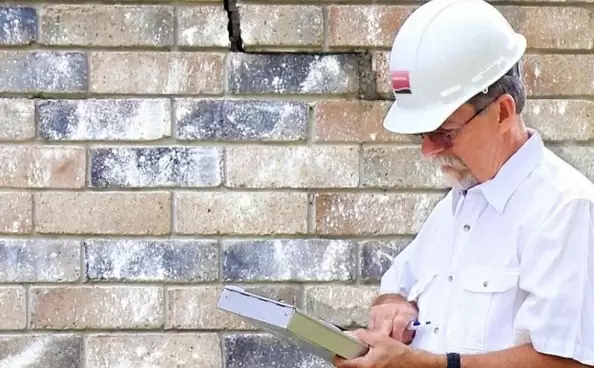
Not all cracks are the same. The type, size, and location of cracks are important to consider when determining the cause of the problem and to guide you in the right direction in your search for a solution. Similarly, the success of a restoration project is based on a combination of immediate and delayed benefits, drawbacks, and risks. Different Types of Wall Cracks: The most common types of wall cracks are: Internal cracks that affect drywall, plaster, brickwork, or masonry External cracks in brick (and any other stone) masonry, masonry, or plaster on exterior walls If cracks in your walls suddenly appear in your home (not to be confused with your sudden discovery, as you may have simply not noticed for a long time), they may be a symptom of a deeper structural problem. Smaller hairline cracks are quite common in walls and are usually not a cause for concern for property owners. Larger cracks that start at windows, doorways or building corners may indicate that the foundation of the building has failed, sagged or lost its strength, causing all or part of the building to subside. Pay attention to whether the crack is open or closed, horizontal or vertical, zigzag, stepped (for example, in brickwork) or follows the joint lines at joints. If the crack is 5 mm or wider at at least one place along its entire path, or you notice a complete separation in the structure of the joint (in the mortar or cement between the bricks), then it is recommended to seek professional advice. In other cases, do not ignore the signs of destruction, and in any case, draw up a monitoring plan and inspect the structure at least once a month, recording the condition of the structure at the time of inspection. RECONSTRUCTION PROCESS: Once the root cause is identified as subsidence or reduced bearing capacity, there are always several solutions to consider. This includes traditional reinforcement methods or the non-invasive injection method, which is the most rapid and simplified with a more cost-effective result. Premium Technologies resin injections are designed to be applied locally to precisely defined areas of subsidence and weakness in the foundation beneath the structure. Using a process similar to surgery, the method increases the bearing capacity of the soil and levels the building with high precision. Whether the cracks in the walls will be completely closed depends on the direction of the crack and the condition of the foundation beneath your home. So the main question is – can the structure withstand the leveling force? In the vast majority of cases, homes and structures can be leveled within a day using Premium Technologies technologies, and the process itself is tightly monitored using laser levels to ensure accuracy. A CHEAP WAY TO ORGANIZE OBSERVATIONS: In everyday life, in addition to professional beacons, a special indicator is used to monitor the behavior of structures – a tape that is attached to significant cracks in the wall. This visual indicator is one of many measurement methods that technicians use to carefully monitor changes throughout the controlled restoration or observation process. Even to the untrained eye, it is quite possible to detect a visible change or distortion of the tape due to movement or deformation of parts of the structure to which it was applied. The tape can also show how the structure moves in response to the restoration of the foundation level, including the direction and degree of rise. However, it should be understood that the tape is very sensitive to external environmental conditions. Humidity, external influences and temperature changes can disrupt the fastening and distort objective information. To achieve the best long-term results after restoration work, Premium Technologies recommends organizing geodetic monitoring of the building condition and regular inspection of nodes and structures.