
Elimination of subsidence and repair of concrete pools
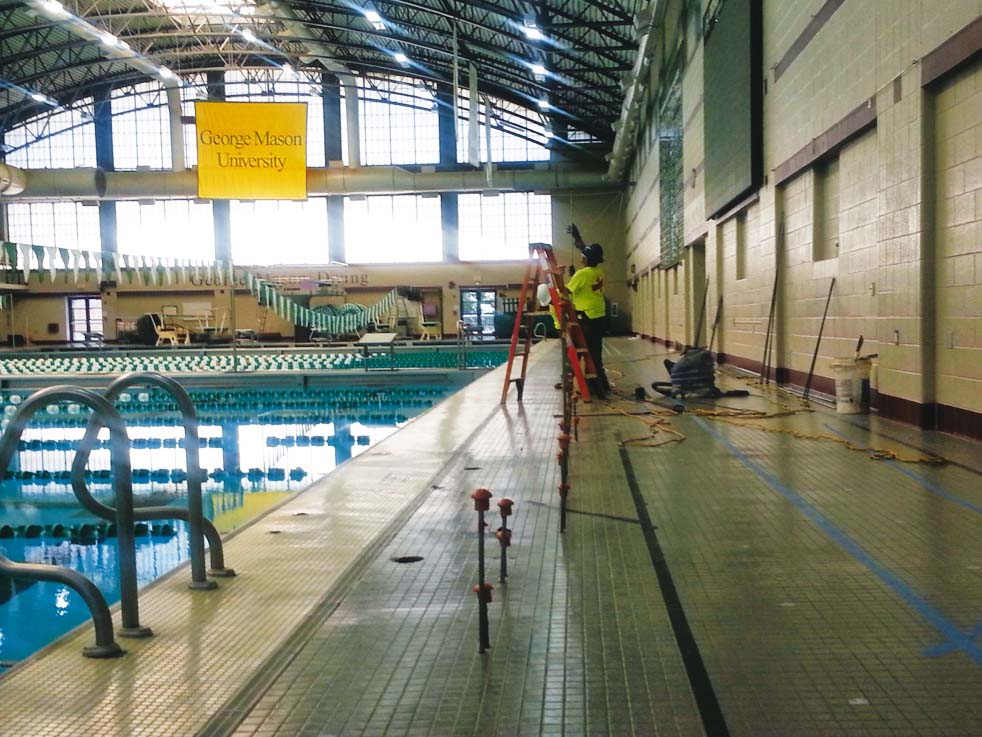
A decrease in the water level in a concrete pool can be caused by various reasons. In addition to natural evaporation and problems with a faulty pipeline, more serious situations are possible when cracks form in the pool due to subsidence of the foundation. In this case, urgent restoration work is required. Cracks in concrete pools occur due to uneven settlement of the concrete bowl, the cause of which is poor soil compaction or soil wetting in the pool area, for example, a breakthrough of water pipes. Since the appearance of cracks leads to water leakage, further deterioration of the situation is inevitable. The soil under the pool will erode even more and as a result it will become impossible to operate the facility. To correct the situation, it is not enough to simply close and waterproof the cracks in the concrete. First of all, it is necessary to eliminate the cause of the cracks. If their appearance is caused by uneven settlement of the structure, the soil under the pool should be strengthened, as well as its foundation should be stabilized. This can be done in just 1-2 days without concrete and earthworks. To do this, you need to use the method of deep injection of Premium Technologies geopolymers. DEEP LIFTING TECHNOLOGY Elimination of cracks caused by uneven settlement of concrete pools requires a comprehensive approach. First of all, it is necessary to fill the voids in the soil that have formed under the pool, and also, if necessary, to strengthen the excessively moistened soil. Often, it is necessary not only to stop the subsidence and stabilize the position of the pool, but also to raise the concrete structure. And only then, after eliminating the cause, it makes sense to seal and waterproof the cracks in the concrete. To raise and stabilize the position of the pool in the ground, the Deep Lifting geopolymer injection method, which is performed by the Premium Technologies company, is suitable. This method involves the introduction of geopolymer material into the ground under the pool, which expands and fills all voids in the ground. In this case, geopolymers displace water and strengthen weakened and excessively moistened soil, additionally performing the function of waterproofing the structure in the horizontal plane. Injection is carried out through wells with a diameter of 8-16 mm, which are filled immediately after the work is completed. Injection is possible along the perimeter of the pool, as well as directly into the base of the bowl. PRINCIPLE OF ACTION OF GEOPOLYMERS The Premium Technologies geopolymer injection method is characterized by a non-destructive effect and is extremely effective for strengthening the soil and stabilizing the position of concrete structures. Premium Technologies geopolymer resins create powerful vertically directed pressure, which allows you to return the settled pool to the design level and eliminate the cause of cracks in the concrete bowl. The process of lifting and stabilizing the pool takes place under the careful supervision of specialists and is regulated using a laser level (accuracy up to ± 1 mm). At the same time, the structure of Premium Technologies geopolymer resins has waterproofing and water-repellent properties. The Premium Technologies material does not come into contact with water and retains its characteristics for a long time, including in an excessively humid environment.
Leveling and stabilizing the airfield surface
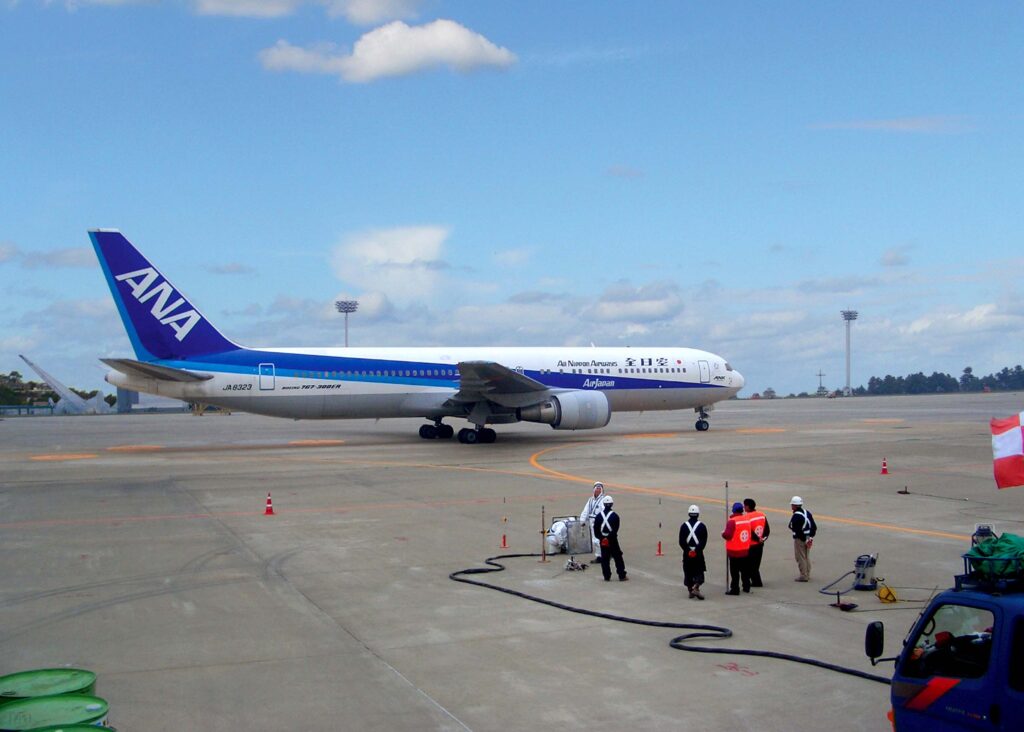
Intensive operation of airfields can lead to dangerous subsidence of the surface over time. Lifting and stabilizing concrete slabs of the airfield using traditional methods threatens to take the facility out of operation for weeks or months. Restoration of the surface using Premium Technologies technologies will take a few days or even hours. The subsidence of airfield concrete slabs can be caused by various reasons. Among them are the increase in the load on the airport and the inconsistency of the project with modern requirements, damage to the airfield drainage system, natural wear and tear of the object, and so on. Most often, sagging, cracked or slightly curved concrete slabs of taxiways and runways within the permissible values may not pose a direct threat and not create emergency and dangerous situations. However, problems may arise, for example, with a sharp change in weather conditions. For example, excessive precipitation with a sharp drop in temperature can lead to the formation of a dangerous layer of ice on the surface of the airport pavement. SOIL REINFORCEMENT UNDER COVERING The situation can be corrected by operative intervention in the condition of the soil under the concrete slabs of the airfield. To perform the traditional operation of strengthening the soil, lifting and stabilizing the position of the airfield concrete slabs, it is often necessary to completely dismantle the slabs in the area of the subsidence with subsequent restoration of the coating. At the same time, to perform similar operations of strengthening the soil and leveling the position of the concrete slabs of the airfield using Premium Technologies technologies, it is not necessary to dismantle the coating. It is enough to drill several holes with a diameter of 16 mm in the concrete or in the joints between the slabs and apply a multicomponent geopolymer material to the required depth. TECHNOLOGY SPECIFICATIONS The unique property of Premium Technologies geopolymer resins is that they expand and gain high strength just 15 minutes after injection. Immediately after the work, the restored area can be operated in the mode of permissible loads: the stabilized area of the airfield can withstand the full weight of an airliner. Thus, to fully restore the operational condition of the airfield coating, it is often not necessary not only to close the facility for a long time, but also to change the flight schedule. The necessary work can be performed taking into account traffic, at night, when the natural load on the airport is low. An important advantage of Premium Technologies geopolymer injection technologies is the complete autonomy of the equipment: the equipment and materials required for the work are compactly placed in a mobile complex, which will not create restrictions for the movement of aircraft on the rest of the airfield. TWO METHODOLOGIES Two geopolymer injection technologies are commonly used to repair airfield pavement. To strengthen the soil at a depth of several meters, the Deep Lifting injection technology is used. To directly level the position of concrete slabs, the Floor Lifting method is used with injections under the slabs themselves. In this case, the position of the concrete slabs can be easily adjusted in real time during the injection of geopolymer resins. For this purpose, special ultra-precise laser levels are used, capable of recording movement within ± 1 mm.
Restoration of historical sites
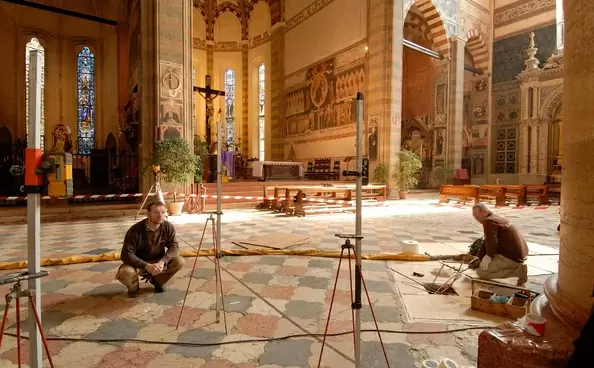
Palaces, estates, fortresses, castles, churches and other architectural monuments of high historical value collapse over time. At the same time, the procedure for their reconstruction and restoration should cause minimal damage to the structure, which is especially difficult to do when it comes to repairing the floor and raising the foundation. The condition of architectural monuments deteriorates over time. The appearance of the facades and interiors of historical buildings and structures is affected by changes in ambient temperature and humidity, increased air pollution and natural destruction of materials under the influence of time. Valuable objects of historical and cultural heritage have to be restored and reconstructed regularly, if possible, using modern materials and technologies. One of the most difficult tasks related to the restoration of historical buildings is the need to repair and raise the foundation and floor of architectural monuments. Over time, the foundations of historical buildings may experience gradual subsidence, and voids may form under the floor, which lead to the lowering of its individual sections. Such damage threatens not only the emergency state of the object and its removal from the register of historical heritage structures, but also the complete destruction of the monument. After all, subsidence of the foundation leads to the appearance of cracks in the walls, and to damage and even destruction of the supporting structures. FOUNDATION REPAIR AND SOIL REINFORCEMENT Often, it is not possible to raise the foundation and floor, as well as strengthen the soil under an architectural monument without damaging the historical value of the object. First of all, this applies to traditional technologies for repairing the foundation and raising the floor, which involve the use of heavy construction equipment and carrying out earthworks and concrete works. If both the building itself and the floor of the structure have historical value and their damage is unacceptable, it is better to use the Premium Technologies geopolymer injection technology for restoration. The latter not only minimizes damage to the historical value of the object, but also saves finances compared to traditional restoration methods. Premium Technologies RECOVERY METHODOLOGY To strengthen the soil under the foundation of an architectural monument, as well as to lift the foundation and level the floor, two technologies for injecting Premium Technologies geopolymer resins are used. The Deep Lifting technique involves injection to a considerable depth to strengthen the soil and lift the foundation, and the Floor Lifting technology involves the introduction of geopolymers directly under the floor of the first floor of the building to level it. Injection is performed by drilling small holes in the soil or road surface around the perimeter of the structure or by making similar holes with a diameter of 8-16 mm in the floor of the first floor. At the same time, the equipment for injecting Premium Technologies geopolymer resins is mobile, compact and does not damage the historical value of the object. Technological holes in the floor are easy to close. The procedure for restoring the structure itself is carried out in a short time: the geopolymer material Premium Technologies expands and gains strength within 15 minutes after injection. And the movement of the components of the foundation and floor, which contributes, among other things, to the restoration of cracks in the walls, is controlled in real time using ultra-precise laser levels.
Construction inspection of buildings
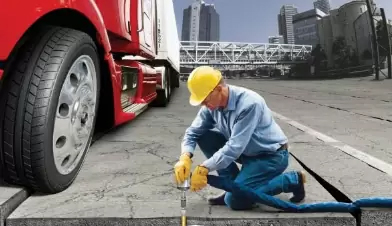
The type of building condition survey is carried out depending on the purpose of the survey and the service life of the building itself. They can be planned and unplanned and are carried out in the following cases: Inspection upon completion of construction or major repairs – for compliance with the project. Survey before future current repairs – for the purpose of detecting damage and defects and determining future work. Inspection of premises before approval for any type of planned repairs. Examination of the general condition of buildings and premises damaged as a result of accidents. WHEN IS A BUILDING INSPECTION NECESSARY? The main task when conducting technical surveys is to determine the general condition of the foundation, main and enclosing structures, partitions, ceilings and finishing coatings. Such a procedure is required when: expiration of the service life of buildings; carrying out major, current and other repairs; changing the functional purpose of the structure; reconstruction or addition or superstructure of buildings; emergency condition of buildings; future sale or purchase of a building. Scheduled inspections are carried out once every 10 years. If the operating conditions of the building are not favorable enough, then this period can be reduced to 5 years (in accordance with current regulations). TYPES OF INSPECTIONS: A construction inspection allows you to correctly assess the level of future work and the amount of funds invested in them. When performing it, special attention should be paid to the following types of expert work: Analysis of building structures. It is carried out if it is necessary to determine the technical condition of the building, as well as if there is to be reconstruction or redevelopment. Thanks to it, defects can be quickly eliminated at an early stage of reconstruction work. Determination of the condition of structures. Necessary for the process of preparing for the purchase or sale of an object. Provides comprehensive information about the general condition of the building, as well as the likelihood of repairs. Allows you to find problem areas and indicate ways to eliminate them. Calculation of bearing capacities. It is carried out during the construction of buildings, redevelopment and reconstruction. It allows you to identify possible defects that can lead to the destruction of the building. Foundation survey. It is carried out if it is necessary to build a superstructure in the house, as well as when changing environmental conditions (for example, the construction of a large factory is planned nearby). Such an examination reveals any defects in the foundation, which are subsequently eliminated by specialists, and allows you to correctly assess the bearing capacity of the structure. Examination of the foundation soils. Depending on the situation and composition of the soil base, such a geological survey can be carried out in several stages. This includes hydrogeological studies and analysis of groundwater in the laboratory – carried out before the start of construction of buildings. The examination is carried out in order to accurately indicate the type of foundation being laid. In some cases, a selective study is possible – when it is necessary to inspect potentially dangerous places or examine individual elements of the premises. Georadar survey. Despite the fact that the depth of the study in this case is limited to a depth of 100 meters, it is indispensable for detecting voids, flooding and other soil defects. Also, using a ground-penetrating radar, utility networks and communications are searched. This type of study is carried out in all types of construction, as it allows you to determine the quality of concrete structures in accordance with current regulations. Study of the strength of concrete structures. It provides for several methods of analysis, including non-destructive ones, which are used depending on the purpose of the general examination. It is used in the construction, reconstruction and operation of construction sites.
Screw piles are a popular type of pile foundation.
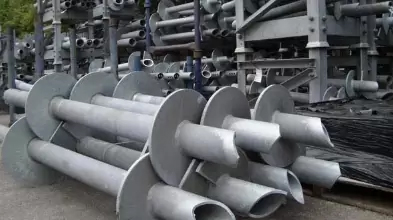
The arrangement of foundations, as well as the strengthening of existing foundations using screw piles, due to the development of the technical base, is becoming increasingly accessible for use in private purposes. This type of pile foundation is distinguished by its reasonable price and a visible effective result in the shortest possible time. A screw pile is a pipe with blades, which is driven into the ground by the screwing method. The use of piles significantly increases the strength and stability of the base of the building structure. Such a foundation is characterized by high resistance to soil erosion by groundwater, natural shrinkage. The result is superior even to the expensive and technically complex complete replacement of the foundation. The highest stability of the supporting structure when using screw pile technology makes it possible to erect additional floors even in buildings that were in a state of emergency. IN WHAT CASES IS SCREW PILES CURRENTLY USED? The use of screw piles as a method of strengthening the foundation significantly expands the geography of construction work. On screw piles as a base, it is possible to erect metal and concrete structures with minimal excavation. Strengthening foundations on waterlogged, peaty, clay, sandy soils takes a minimum of time and labor, and the result often exceeds the wildest expectations. In general, screw piles are one of the most popular and versatile ways to strengthen foundations and increase the bearing capacity of the entire structure being erected or already built on weak soils. A pile made in accordance with GOST is able to withstand the effects of weather, frost heaving forces and the effects of loads for a long time. WHAT PROBLEMS CAN THE APPLICATION OF SCREW PILES HELP TO SOLV? The key task of screw piles is to strengthen the supporting structure in problem areas with low soil density. The unique design with wide blades at the base of the pile increases the actual area of support on the ground. Unlike reinforced concrete foundations, a screw pile can withstand more than 20 tons of pressure. Piles can be used for the following purposes: Increased bearing capacity of a multi-storey building. Partially or completely replacing an old foundation that is under constant pressure is impossible. In this case, piles can support the foundation without exposing the structure to unwanted external influences. Strengthening old houses with weak foundations for the construction of superstructures. Stabilization of the soil under structures due to excessive subsidence or skew. A screw pile is screwed into deep hard layers of soil, thereby maintaining the stability of the building foundation in almost any conditions. MODERN ALTERNATIVE TO SCREW PILES Despite the high efficiency of using screw piles, more advanced and effective methods have now appeared that allow solving the problem of high-quality construction in the opposite way – not to strengthen the foundation, but to stabilize the soil. The unique technique of our company Premium Technologies Deep Lifting allows us to achieve high stability of the foundation in an even shorter time. The essence of the technology is the point introduction into the soil of a special geopolymer resin, which expands and fills all voids, removes excess water from the pores and raises the foundation to its previous level. In this case, there is no excavation work. Using the latest technology, the Premium Technologies company guarantees a quick and high-quality increase in the bearing capacity of soils, which allows us to strengthen an existing, even emergency, structure.