
Palaces, estates, fortresses, castles, churches and other architectural monuments of high historical value collapse over time. At the same time, the procedure for their reconstruction and restoration should cause minimal damage to the structure, which is especially difficult to do when it comes to repairing the floor and raising the foundation.
The condition of architectural monuments deteriorates over time. The appearance of the facades and interiors of historical buildings and structures is affected by changes in ambient temperature and humidity, increased air pollution and natural destruction of materials under the influence of time. Valuable objects of historical and cultural heritage have to be restored and reconstructed regularly, if possible, using modern materials and technologies.
One of the most difficult tasks related to the restoration of historical buildings is the need to repair and raise the foundation and floor of architectural monuments. Over time, the foundations of historical buildings may experience gradual subsidence, and voids may form under the floor, which lead to the lowering of its individual sections. Such damage threatens not only the emergency state of the object and its removal from the register of historical heritage structures, but also the complete destruction of the monument. After all, subsidence of the foundation leads to the appearance of cracks in the walls, and to damage and even destruction of the supporting structures.
FOUNDATION REPAIR AND SOIL REINFORCEMENT
Often, it is not possible to raise the foundation and floor, as well as strengthen the soil under an architectural monument without damaging the historical value of the object. First of all, this applies to traditional technologies for repairing the foundation and raising the floor, which involve the use of heavy construction equipment and carrying out earthworks and concrete works.
If both the building itself and the floor of the structure have historical value and their damage is unacceptable, it is better to use the Premium Technologies geopolymer injection technology for restoration. The latter not only minimizes damage to the historical value of the object, but also saves finances compared to traditional restoration methods.
Premium Technologies RECOVERY METHODOLOGY
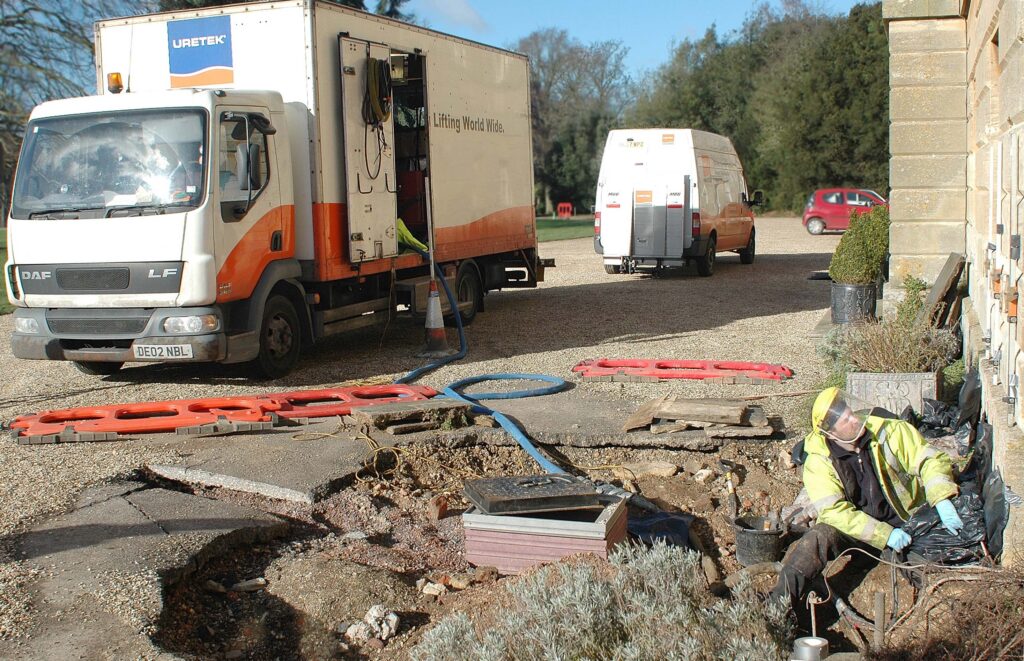
To strengthen the soil under the foundation of an architectural monument, as well as to lift the foundation and level the floor, two technologies for injecting Premium Technologies geopolymer resins are used. The Deep Lifting technique involves injection to a considerable depth to strengthen the soil and lift the foundation, and the Floor Lifting technology involves the introduction of geopolymers directly under the floor of the first floor of the building to level it.
Injection is performed by drilling small holes in the soil or road surface around the perimeter of the structure or by making similar holes with a diameter of 8-16 mm in the floor of the first floor. At the same time, the equipment for injecting Premium Technologies geopolymer resins is mobile, compact and does not damage the historical value of the object. Technological holes in the floor are easy to close.
The procedure for restoring the structure itself is carried out in a short time: the geopolymer material Premium Technologies expands and gains strength within 15 minutes after injection. And the movement of the components of the foundation and floor, which contributes, among other things, to the restoration of cracks in the walls, is controlled in real time using ultra-precise laser levels.